Resort vs Local Island Board Sports in Maldives
Discover the differences between board sports at Maldives resorts and local islands. Compare prices, surf access, gear, and lessons to find the best option for your adventure. Resort vs Local Island
SURF & BOARD SPORTS
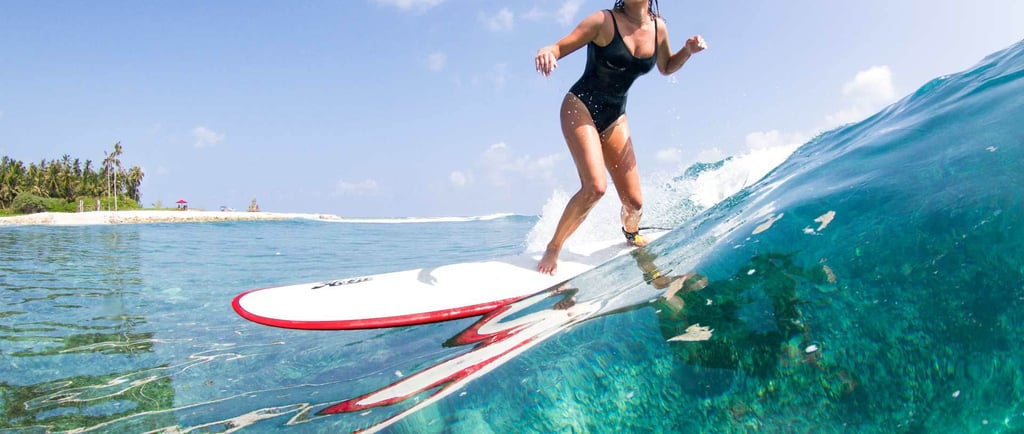
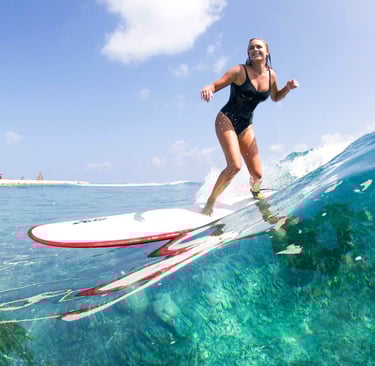
If you want to try board sports in the Maldives, the biggest choice is not just what to ride, but where to base yourself. In practice, most travelers are choosing between a private resort watersports center and a stay on a local island with access to surf schools, guesthouses, and independent operators. The Maldives is well known for surf breaks suited to beginner, intermediate, and advanced surfers, and the official Visit Maldives surf campaign highlights that range clearly.
For most people, the real difference is simple. Resorts are usually easier, more polished, and more beginner-friendly for casual SUP, windsurfing, wakeboarding, and intro surf lessons. Local islands are usually better if you care about value, repeat surf access, and getting closer to real reef breaks rather than staying mostly inside a resort lagoon.
What counts as board sports in the Maldives?
In the Maldives, “board sports” usually includes surfing, stand-up paddleboarding, windsurfing, and, at many resorts, tow-based options such as wakeboarding and waterskiing. Resort operators like Crossroads and Kagi list these activities directly in their current watersports price sheets, while local-island surf hubs like Thulusdhoo focus much more heavily on surfing, surf guiding, rentals, and repeated access to nearby breaks.
Price: local islands usually win for surf trips, resorts vary by activity
If price is your main filter, local island surfing is usually the better value. Thulusdhoo’s local guide says surf lessons can cost about $75 and a surfboard rental about $35, which is a very different budget level from many resort-based guided surf products.
At resorts, pricing is often more structured and higher. Crossroads lists SUP rental at $30 for 1 hour, a SUP lesson at $45 for 1 hour, beginner lagoon surf lessons at $75 for 1 hour, and beginner group surf lessons that combine lagoon teaching plus boat time to the break at $190 for 2.5 hours. Kagi lists windsurf entry-level rental at $19.16 for 1 hour, SUP at $52.65 for 1 hour, and a private windsurf lesson at $99.85 for 1 hour. Resort pricing can be worth it for convenience, but it is rarely the cheapest path for multiple surf days.
Access to lagoons and reef breaks
This is where the difference becomes obvious. Resorts are strongest for safe, controlled lagoon learning. Ocean Group’s resort surf page explicitly says first lessons start at the resort beach in calm water, and Crossroads says its group and private surf lessons include a lagoon lesson plus time at the surf break by speedboat. That setup is ideal for nervous beginners.
Local islands are usually better if your goal is repeated access to actual reef breaks. Season Paradise in Thulusdhoo says Coke’s is its home break, Chickens is a 5-minute dinghy ride away, and other famous North Malé atoll breaks are 15 to 30 minutes away on guided surf trips. Thulusdhoo’s own local guide also points out that some nearby breaks suit beginners while others are clearly for more advanced surfers. That means local islands can give surfers more direct access to the real break network rather than a mostly lagoon-based resort experience.
Equipment quality: resorts are usually more consistent
For equipment quality, resorts tend to feel more standardized. You usually get a formal watersports center, set rental categories, clear lesson products, and tighter replacement/damage rules. Crossroads publishes named products and detailed pricing, and Kagi’s current list lays out rentals, lessons, rescue fees, and damage terms. That does not prove every resort has better gear than every local operator, but it does show that resort operations are usually more systematized and predictable.
Local islands can still be excellent, especially in established surf hubs, but quality varies more by guesthouse, surf school, and operator. Season Paradise advertises board rental and repair on site, while Thulusdhoo’s local guide says guesthouses provide lessons, rentals, surf trips, and repairs. In other words, local islands can be very workable, but you are depending more on choosing the right operator instead of relying on one resort-standard experience.
Instructor availability: resorts for easy access, local islands for surf depth
If you want easy access to an instructor without much planning, resorts are often simpler. Crossroads offers kids lagoon lessons, beginner lagoon lessons, group lessons, and private lessons, while Kagi states that if guests do not have prior experience, a lesson must be taken before equipment is rented out. That is a very beginner-friendly structure.
If your focus is specifically surfing, local islands often have more depth. Season Paradise says surf lessons are provided by a partner professional surf school and mentions qualified local surf guides, while Thulusdhoo is built around recurring surf trips and surf camps. Local islands are often the stronger choice for people who want several surf sessions across multiple days rather than just one lesson during a resort stay.
Rules: resorts are clearer and stricter
Resorts almost always have stricter and more visible operating rules. Crossroads says participants must remain in sight of watersports staff at all times and are required to wear life jackets. Kagi states that all watersports are subject to weather and availability, and that first-timers must take a lesson before gear is rented. Those kinds of written rules are part of why resorts feel safer and more controlled for casual users.
Local islands also have rules, of course, but they are often less formal in public-facing listings and more dependent on the surf school or guide. That can feel freer for experienced surfers, but it also means beginners need to ask more questions before booking. This is especially true if you are planning reef-break surfing rather than lagoon paddling.
The shortcut is simple: choose a resort if you want polished convenience, choose a local island if you want better surf value and more authentic access to nearby breaks.
Which is better?
Choose a resort watersports stay if you are a beginner, you want easy access to instructors, or you care more about convenience than raw surf mileage. Resorts are especially strong for casual SUP, windsurfing, wakeboarding, and first surf sessions in a controlled lagoon.
Choose a local island board sports trip if you mainly care about surfing, want better value over several days, or want faster access to real reef breaks like Coke’s, Chickens, Sultans, or Ninjas depending on your base island and level. For surfers, local islands usually offer the stronger sport-first trip