Responsible Maldives Manta Ray & Whale Shark Tours
Discover how to choose responsible wildlife excursions in the Maldives. Explore unforgettable manta ray and whale shark tours while ensuring eco-friendly practices. Join us for an adventure that respects marine life!
OCEAN EXTRAS
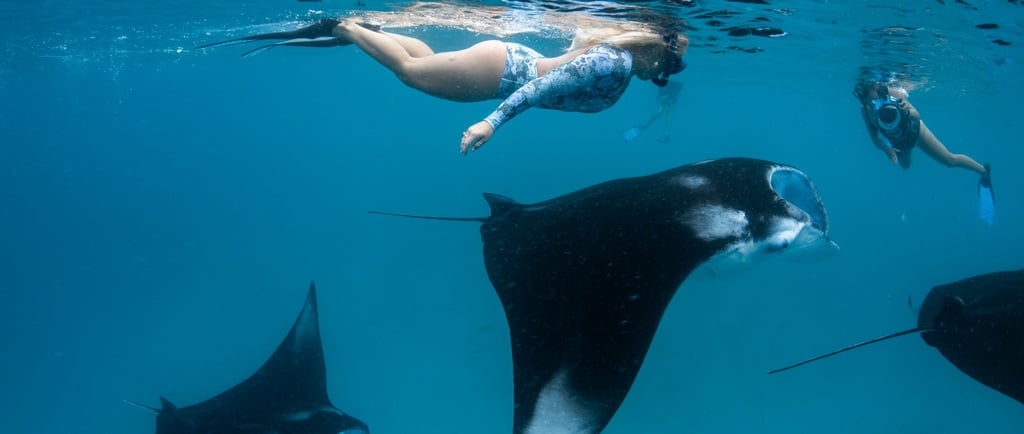
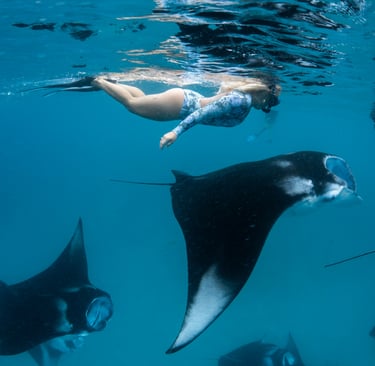
If you’re searching for the best Maldives manta ray tour or whale shark excursion in the Maldives, the most important question is not just where to go but how the tour is run. The Maldives is one of the world’s standout places for seeing manta rays and whale sharks, but responsible operators matter because wildlife encounters should protect the animals first and entertain people second. Visit Maldives highlights South Ari Atoll for year-round whale shark sightings, with a peak period around August to November, and notes that manta rays are commonly found during the northeast monsoon, roughly October to May in some areas. Even so, sightings are never guaranteed because these are wild animals, not scheduled attractions.
How to choose an ethical wildlife tour operator
A good Maldives marine wildlife tour should start with a clear briefing before anyone gets in the water. That briefing should explain distance rules, no-touch rules, how guests should enter the water, and what to do if an animal changes direction or seems disturbed. For whale sharks, Visit Maldives summarizes the Maldives Whale Shark Research Programme guidance as: do not touch, keep 3–4 metres away, do not obstruct the animal’s path, do not swim on top of it, avoid flash photography, and reduce noise.
For mantas, Manta Trust research from the Maldives supports a similar low-impact approach. Research-backed guidance found that disturbance is lower when people stay more than 3 metres away and avoid positioning themselves on cleaning stations, where mantas pause for important cleaning behavior. Studies also recommend passive observation rather than chasing or cutting across a manta’s path.
In practice, an ethical operator usually does a few things well:
briefs guests before entry,
keeps the group calm and compact,
avoids crowding animals,
follows local codes of conduct,
and makes it clear that no sighting is guaranteed.
If an operator markets the trip like a guaranteed performance, that is a warning sign.
Safe distances matter
The simplest rule is this: stay far enough away that the animal does not change its behavior because of you. For whale sharks in the Maldives, the commonly cited code of conduct is 3–4 metres. For manta rays, Maldives research tied better outcomes to maintaining more than 3 metres and staying out of cleaning-station space.
That means:
do not sprint-swim toward the animal,
do not cut in front of it for a photo,
do not dive down from above,
and do not surround it with a semicircle of snorkelers.
A responsible guide will usually place guests off to the side or slightly ahead of where the boat expects an encounter, then let the animal decide whether it passes nearby.
No touching means no touching
This sounds obvious, but it is one of the most important rules. Do not touch manta rays or whale sharks. That includes hands, fins, GoPros, selfie sticks, and accidental bumping caused by getting too close. Visit Maldives’ whale shark guidance explicitly says not to touch the shark, and Manta Trust repeatedly stresses following the local code of conduct when swimming or diving with mantas.
Touching can stress animals, disrupt feeding or cleaning behavior, and increase the chance of unsafe interactions for both wildlife and people.
Group limits and crowd control
One of the biggest differences between a good tour and a bad one is how the group is managed. Even if a public-facing website does not list an exact maximum group size, ethical operation still looks the same: fewer people in the water at one time, controlled entries, and guides actively preventing crowding. Manta Trust research specifically notes that guides play an essential role in minimizing disturbance by using the code of conduct as part of an educational briefing.
A good operator will often:
stagger entries,
keep snorkelers together,
pull people back if they drift into the animal’s path,
and avoid dropping a large chaotic group directly onto the encounter.
If you see multiple boats unloading people on top of an animal, that is not a good sign.
Why reef etiquette matters
Reef etiquette is not separate from wildlife etiquette. It is part of the same thing. If guests stand on coral, kick coral with fins, stir up sand, or chase wildlife through fragile reef areas, they damage the habitat that supports the very animals they came to see. Manta Trust warns that unsustainable tourism is one of the pressures facing manta rays, and its Maldives work has focused on evidence-based codes of conduct to reduce tourism disturbance.
Good reef etiquette means floating calmly, keeping fins off the reef, not grabbing coral for balance, and not treating a wildlife encounter as a race for the closest photo.
Seasonality in the Maldives
If you want the best chance of success, season and location matter. Visit Maldives says South Ari Atoll is one of the best places for whale sharks, with sightings possible year-round and stronger chances around August to November. For manta rays, Visit Maldives notes seasonal patterns linked to monsoons, with strong viewing windows in some areas around October to May, while other atolls and channels can vary.
That does not mean you will definitely see them during those months. It only means your odds may improve. Wildlife tours should always be sold as probability, not promise.
What to do if you see unsafe behavior
If you see unsafe or irresponsible behavior, the best first step is to stay calm and avoid adding to the chaos yourself. Move back, give the animal more room, and follow the guide if they are trying to re-organize the group. If the guide is the one behaving irresponsibly, document details after the trip and report the issue to the operator, resort, guesthouse, or booking platform.
Unsafe behavior includes:
touching the animal,
chasing it,
blocking its path,
swimming on top of it,
crowding a cleaning station,
or dropping too many people directly into the encounter zone.
You do not need to argue in the water. The safer move is to create space, protect the animal by not contributing to the pressure, and raise the issue once you are back on board.
Do / Don’t list
Do
Choose operators that give a proper wildlife briefing.
Keep at least 3–4 metres from whale sharks.
Stay more than 3 metres from manta rays and avoid cleaning stations.
Let the animal keep a clear path ahead.
Expect that sightings are not guaranteed.
Keep fins, hands, and cameras off coral and wildlife.
Don’t
Don’t touch manta rays or whale sharks.
Don’t swim on top of a whale shark.
Don’t dive in front of mantas or hover on cleaning stations.
Don’t use flash photography around whale sharks.
Don’t crowd the animal with a big group.
Don’t trust any tour that sells wildlife like a guaranteed show.
Final thoughts
The best responsible manta ray and whale shark tours in the Maldives are the ones that leave both guests and wildlife unstressed. Choose operators that brief well, manage groups tightly, respect safe distances, and are honest about seasonality and the fact that sightings are never guaranteed. That is better for the reef, better for the animals, and usually better for the experience too.