Maldives Diving Guide: Liveaboard vs Resort
Explore the ultimate Maldives diving guide! Discover the differences between liveaboard diving, resort diving, and local island diving. Find the best options for your underwater adventure in the stunning Maldives.
DIVING
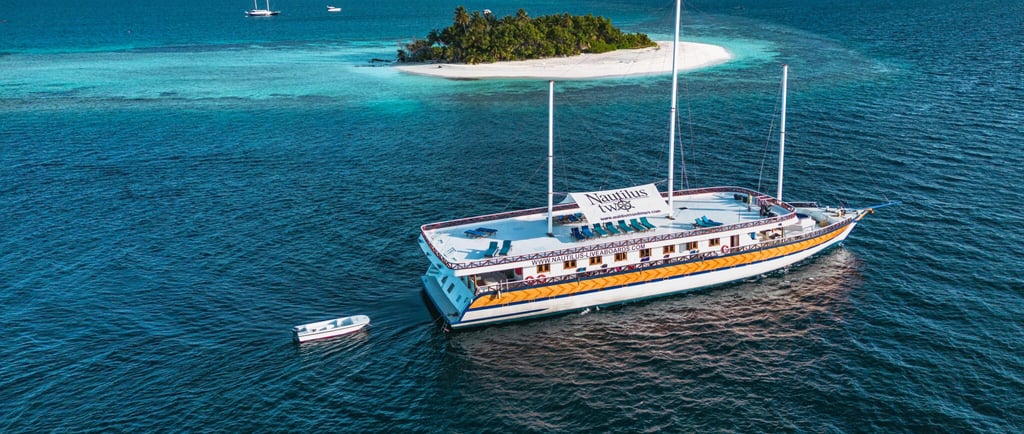
Planning a dive trip to the Maldives usually comes down to three styles: a liveaboard, a resort-based dive holiday, or a stay on a local island. All three can deliver beautiful reefs, channels, thilas, mantas, sharks, and drift diving, but they feel very different once you compare cost, convenience, time on the water, and how much of the country you actually see. PADI notes that many Maldives liveaboards run for 7 to 10 days and reach areas that are only practical by dive cruise, while local-island diving grew specifically to make Maldives diving more affordable.
The simplest way to choose is this: liveaboards are best for divers who want maximum dive variety and don’t mind living on a boat, resorts are best for comfort and easy logistics, and local islands are best for budget-conscious travelers who want a more grounded Maldivian experience.
What makes each style different?
A liveaboard is a dive cruise. You sleep onboard, move between atolls, and spend most of the trip at sea. PADI says this format is especially useful in the Maldives because many sites are remote and some are only really accessible by dive cruise.
A resort dive trip keeps you on one island base, usually with a dedicated dive center and boat departures from the resort. It is more comfortable and predictable, but your diving is naturally limited to the sites within practical boat range of that resort.
A local island dive trip means staying in a guesthouse or small hotel on an inhabited island and diving with a local or nearby center. PADI’s local-island guide says this format expanded after tourism rules changed and made Maldives diving “more affordable than ever.”
Cost: which one is cheapest?
Local island diving is usually the cheapest overall. PADI’s local-island guide says guesthouse prices can range from about USD 20 to USD 100 per person per night, and Secret Paradise says local-island stays can start from around USD 50 per night. That is the clearest budget entry point in the Maldives.
Liveaboards sit in the middle to premium range, depending on the boat. Current PADI Travel listings show examples such as MY Felicity from USD 196 per day, Spirit of Maldives from USD 201 per day, and Maldives Master from USD 242 per day. Once you multiply that across a 7 to 10 day itinerary, the total spend is significant, though you are bundling accommodation, transport between dive areas, and a high dive-focused schedule into one trip.
Resort diving is often the most expensive overall because you are paying for resort accommodation first and diving second. Dive pricing itself can vary widely, but PADI Travel’s Maldives listings show examples like a 2-dive half-day trip at USD 209 and 6 boat dives from Naifaru at USD 270, before even factoring in the room cost.
Convenience: which one is easiest?
Resort diving is usually the easiest. You arrive, settle in, and dive from one comfortable base. There is very little moving around, and it is the least complicated option for couples, mixed diver/non-diver trips, and travelers who care about spa time, beach time, and dining as much as diving.
Liveaboards are convenient in a different way. Once you board, the trip is efficient because the boat keeps taking you to the next dive region. PADI notes many Maldives liveaboards depart from Hulhulé near the international airport, and many offer airport transfers, which helps. But it still feels more expedition-style than resort-easy.
Local island diving is the least convenient logistically. PADI’s guide says transfers may involve speedboats, ferries, or even domestic flights depending on the island, and some routes are infrequent enough that you need to plan carefully in advance.
Dive variety: where do you see the most?
Liveaboards win on dive variety. Because they move between atolls and channels, they let you sample more of what makes Maldives diving famous: reefs, thilas, channels, cleaning stations, drift dives, and remote sites. PADI explicitly notes that many areas are only accessible by diving cruise, and its Maldives guide highlights the variety of pinnacles, channels, and atoll structures across the country.
Resort diving can still be excellent, especially if the resort sits in a strong atoll, but it is more geographically limited. You are diving one area very well rather than seeing lots of different areas.
Local island diving varies the most by atoll choice. PADI’s local-island guide makes that point clearly: marine life and signature dive experiences are not the same in every atoll, so your trip quality depends heavily on picking the right island for what you want to see.
Time on the water
If you want your trip to feel fully dive-focused, liveaboards offer the most time on the water by far. You are sleeping at sea, repositioning between dive areas, and building your whole trip around diving. Some PADI group itineraries mention 3 to 4 dives daily on Maldives liveaboards.
Resorts give you less time on the water but more balance. You do your boat dives, then come back to a room, restaurant, beach, or spa. That is perfect for some travelers and too slow for others.
Local island diving often sits between the two. You may do several dives over multiple days, but the trip rhythm is usually shaped more by local boat schedules, guesthouse life, and transfer realities than by nonstop diving.
Group size and trip feel
Resorts often feel the most polished, but group size depends on the resort and season. You might have anything from a private guide add-on to a fairly busy boat.
Liveaboards are social by design. Current PADI listings show examples like MY Felicity accommodating up to 22 guests and Maldives Master up to 26 guests, so you should expect a shared-trip atmosphere unless you charter privately.
Local island trips can feel smaller and more personal. Secret Paradise says its guided Maldives tours are limited to 8 guests, which reflects the more intimate style many local-island operators market, even if individual dive boats may vary.
Who each option is best for
Choose a liveaboard if you are a keen diver who wants the broadest site selection, more sea time, and a trip built around diving first. It is especially strong for returning Maldives divers, underwater photographers, and people happy with a boat-based routine.
Choose a resort dive holiday if comfort matters, your partner may not dive every day, or you want a smoother luxury holiday with diving built in. It is also the easiest choice for first-time Maldives visitors who do not want complicated transfers.
Choose a local island dive trip if budget matters most, or if you want a more local and less insulated Maldives experience. It is also a smart option for travelers who do not mind planning transfers and researching which atoll best matches their marine-life goals.
Packing tips for each style
For a liveaboard, pack light, soft luggage rather than a hard suitcase, plenty of exposure protection for repeated diving, seasickness medication, spare save-a-dive basics, and comfortable onboard clothes. Because you live on the boat, easy-dry clothing and compact organization matter more than fancy outfits.
For a resort dive trip, split your packing between dive gear and resort wear. You will want your normal mask, computer, certification cards, and reef-safe basics, but also casual evening clothes, sandals, and any non-diving items that make the stay enjoyable for downtime between dives.
For a local island dive trip, add modest clothing for time in the village. PADI’s local-island guide specifically recommends loose, modest clothing covering shoulders to knees in public areas, since inhabited islands follow local cultural norms more closely than private resorts.
Final verdict
For pure diving value and site range, liveaboard diving in the Maldives is hard to beat. For the easiest and most polished holiday, resort diving is the safer choice. For travelers who want to keep costs down and experience a more everyday side of the country, local island diving offers the strongest budget path. The right answer is less about which one is “best” and more about what kind of Maldives trip you actually want.